Disinformation False information deliberately and often covertly spread (as by the planting of rumors) in order to influence public opinion or obscure the truth. Merriam-Webster Online
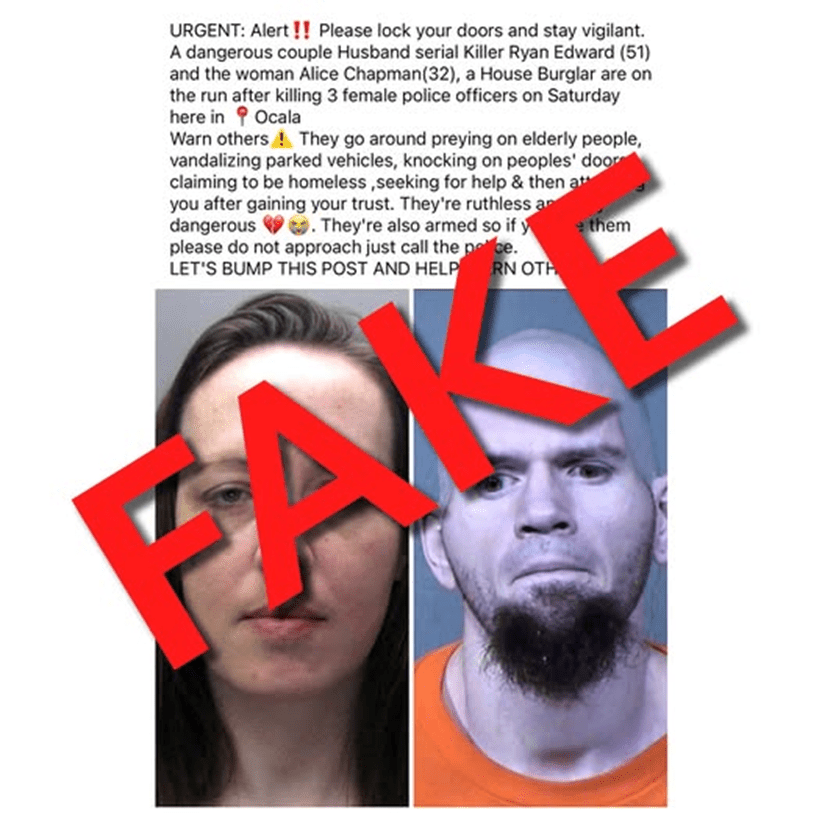
We live in a world that is awash in information and not all information is equal. With AI tools, it has never been easier to create statistics, news articles and even photos that are false or misleading. Many people posting on social media have an agenda that they are trying to accomplish. It may be political, financial or personal. Someone running for political office will be motivated to share posts that make their opponents look bad. CEO’s and business leaders may be motivated to share posts that make their competitors look bad and that will drive customers to their own products. Even your friends may be motivated to “slightly edit” some photos to make their vacation look more glamorous than it really was.

How are we supposed to know what is real and what isn’t? Should we just accept that everything we see online or on the news is probably fake and that there is no way to know the truth? Thankfully, there are options for you if you truly want to understand what is happening in the world and wish to avoid being part of the spread of disinformation.
FactCheck.org is doing an important work in combating fake news and disinformation. Their team of researchers tracks political speeches and ads, viral rumors and social media posts and focuses on claims that are widely circulating, politically influential or potentially false. They gather material, looking for primary sources and then analyze the context of what was said. They often look for what was omitted, whether statistics are reported accurately and if quotes are taken out of context. They are a great resource if you see a story circulating online and aren’t sure if it’s true or not.
While FactCheck.org focuses more on political statements, other types of rumors and disinformation abound on Social Media. Snopes is a great resource for these types of posts. Snopes avoids making a binary judgement of whether something is true/false, the actual reality is often more complicated. Instead, they use a rating system that includes options like – mostly true, mostly false, mixture, unproven, outdated.
Some disinformation that I encountered was hearing some of my friends express outrage that illegal immigrants are being given $5,000 VISA gift cards after crossing the border. It seemed so unbelievable and my friend was so confident that it was true, that I later spent some time researching to see if there was any truth to the claim. Every major fact checker found this claim false – while immigrants are sometimes helped by non-profit organizations, there was no evidence of the Federal Government handing out VISA gift cards.
https://www.snopes.com/fact-check/biden-executive-order-9066/
Another source of disinformation that I and many others encountered was the claim that the 2020 election was “stolen”. Posts making these claims were widely shared over social media. After conducting some research, there was just no evidence of widespread “vote switching” by Dominion as so many people claimed.
https://www.snopes.com/collections/no-systematic-voter-fraud-2020/
I’m sure you’ve heard it said, “Bad news travels fast.” Sadly, false news travels even faster. Studies show that false news travels much faster than true news. This is largely due to the novelty factor. False news is often more novel than true news and people are much quicker to share novel information. The study showed that it took the truth six times longer to reach 1,500 people than false news. Bots are often thought to be a major spreader of fake news but the study found that while bots did spread false news, they also spread true news at the same rate. People, on the other hand, were 70% more likely to retweet false news than true news. https://ide.mit.edu/wp-content/uploads/2018/12/2017-IDE-Research-Brief-False-News.pdf
Let’s do our part to make sure that we are carefully evaluating the media that we read and listen to and judge carefully whether it is likely true or likely false. One of the best ways we can stop the awful virus of fake news is to simply stop sharing posts that are false or misleading.
Verify before you amplify!
Share with care, don’t spread hot air!
This post written for Assignment 4.4 Fact Check Blog, Media and Society(COM-329-01A), Indiana Wesleyan University

